In a world where people are often judged by their appearance, Jono Lancaster’s life offers a powerful reminder that a person’s worth has nothing to do with how they look. His story is one of childhood hardship, unconditional love, self-acceptance, and the determination to make a difference in the lives of others.
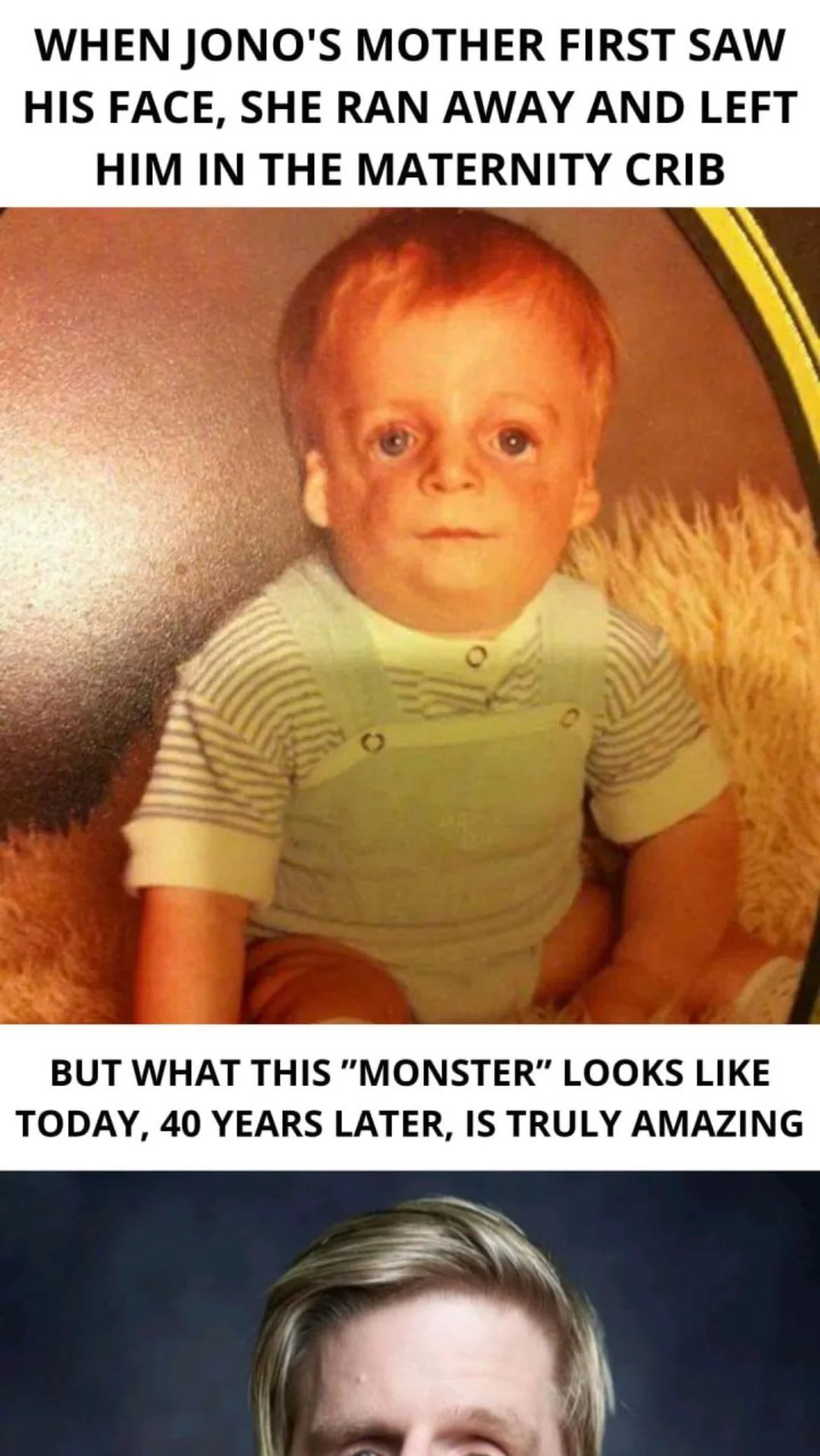
Born in England in October 1985, Jono came into the world with Treacher Collins syndrome, a rare genetic condition that affects the development of facial bones and can cause distinctive facial differences. His diagnosis reportedly left his biological parents overwhelmed. Just 36 hours after his birth, they left him in the hospital, and social services began looking for someone who could care for him.
That person was Jean Lancaster.
When Jean first saw the newborn, she did not focus on his appearance or the uncertainty surrounding his future. She simply wanted to take him home. What began as foster care became a lifelong bond. Jean eventually adopted Jono on May 18, 1990, giving him a permanent family and a place where he was loved without conditions.
Growing up, however, was not always easy. At school, Jono became increasingly conscious of his facial differences. Some children avoided him, stared at him, or made hurtful comments because they misunderstood his condition. Their behavior made him feel isolated, and he sometimes wondered why his life had to be different.
Although his mother offered constant support, Jono tried to hide his sadness from her. During his teenage years, he struggled with loneliness and sought acceptance in unhealthy ways. He later spoke openly about drinking, acting out, and trying to win people’s approval. Beneath that behavior was a young man who simply wanted to feel accepted.
Over time, Jean’s love and Jono’s determination helped him rethink his future. Instead of allowing other people’s judgments to define him, he began using his experiences to encourage others.
As an adult, Jono became an inspirational speaker and educator, raising awareness of Treacher Collins syndrome and supporting families affected by it. He also works with adults with autism and connects with children who may feel alone because they look different. His work reminds them that they are not the only ones facing these challenges.
One particularly meaningful connection was with Zackary Walton, a young Australian boy who also has Treacher Collins syndrome. When they met in 2014, the encounter brought encouragement to Zackary and his family. For Jono, helping a child see someone with a similar condition living confidently was part of the purpose he had found in his own journey.
Love also became an important part of Jono’s story. In 2015, he met Laura Richardson while working as a fitness instructor. Their relationship gave him the opportunity to imagine a future built around partnership and family. Jono had long dreamed of becoming a father, although the possibility of passing on the genetic condition raised difficult questions for the couple. Adoption was one option they considered, shaped by Jono’s own experience of being welcomed into a loving home.
Jono’s journey does not erase the pain of rejection or the difficulties he experienced growing up. Instead, it shows how compassion, support, and a change in perspective can help someone build a meaningful life. The woman who chose to love him from the beginning gave him the foundation to become someone who now offers hope to others.
His message is simple but powerful: a person’s appearance does not define their identity, their potential, or their ability to love and be loved.